Java多线程实践
1.实现Runnable接口
 1 import java.util.Random;
 2
 3
 4 public class PrintTask implements Runnable{
 5     private final int sleepTime;
 6     private final String taskName;
 7     private final static Random generator = new Random();
 8
 9
10     public PrintTask(String name) {
11         taskName = name;
12         sleepTime = generator.nextInt(5000);
13     }
14
15     @Override
16     public void run() {
17         try {
18             System.out.printf("%s going to Sleep for %d milliseconds.\n",
19                     taskName, sleepTime);
20             Thread.sleep(sleepTime);
21         } catch (InterruptedException e) {
22             System.out.printf("%s %s\n", taskName, "terminated prematurely" +
23                     " due to interruption");
24         }
25         System.out.printf("%s done sleeping\n", taskName);
26     }
27
28 }
2.使用ExecutorService管理执行PrintTask的线程
 1 import java.util.Random;
 2
 3
 4 public class PrintTask implements Runnable{
 5     private final int sleepTime;
 6     private final String taskName;
 7     private final static Random generator = new Random();
 8
 9
10     public PrintTask(String name) {
11         taskName = name;
12         sleepTime = generator.nextInt(5000);
13     }
14
15     @Override
16     public void run() {
17         try {
18             System.out.printf("%s going to Sleep for %d milliseconds.\n",
19                     taskName, sleepTime);
20             Thread.sleep(sleepTime);
21         } catch (InterruptedException e) {
22             System.out.printf("%s %s\n", taskName, "terminated prematurely" +
23                     " due to interruption");
24         }
25         System.out.printf("%s done sleeping\n", taskName);
26     }
27
28 }
3.执行结果
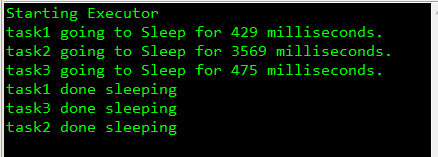
可以看到,由于每个任务随机休眠时间不同,执行结束的顺序是不同的。